 Discuss a project
Online payments on a website in Georgia: BOG, Flitt (TBC) and Stripe
Which payment gateways you can connect to a website in Georgia, what you need, what it roughly costs and how to keep checkout safe for you and your customers.
Online payments on a website in Georgia are usually set up through the gateways of the country’s two largest banks: Bank of Georgia and Flitt, the payment platform of TBC Group. Stripe does not register Georgian companies directly, so for a business serving customers in Georgia it is rarely the first choice. Below we cover what each option offers, roughly what accepting payments costs, how checkout works on the site and what to prepare before you apply to a bank.
We write as a studio that builds websites and admins, not as a bank: exact rates and terms always come from the bank.
Payment gateways in Georgia
Bank of Georgia
The most widely used option in Georgian e-commerce. You need a business account with Bank of Georgia. According to the bank’s documentation, customers can pay:
- by Visa, Mastercard or American Express;
- with Apple Pay and Google Pay;
- in the BOG app;
- with the bank’s loyalty points.
Beyond standard payments, the bank’s API covers installments, saved cards for repeat and automatic payments, pre-authorization (holding an amount on the card) and refunds. There are payment links too: send a customer a link by messenger or email, no website cart required.
Flitt by TBC
Flitt is TBC Group’s payment platform. According to Flitt’s FAQ:
- you need an active TBC Bank account;
- it serves companies registered in Georgia, Armenia, Uzbekistan and Moldova;
- it accepts Visa and Mastercard, Apple Pay, Google Pay and payments straight from a bank account in the banking app (open banking);
- payments in lari, dollars and euros;
- TBC installments and payment links are available, so you don’t need a website to start.
Flitt says open banking payments cost less than card payments and that payments are reflected within 24 hours.
Stripe
Stripe does not officially support Georgia as a business country: it isn’t on Stripe’s list of countries. Georgian businesses that need Stripe usually set up a separate company and bank account, for example in the US or UK. For a business with customers in Georgia, that means extra accounting and reporting.
Payment links instead of a cart
If you don’t have a site with a cart yet but need to take payments now, start with links. Both BOG and Flitt let you create a link for an amount and send it to the customer. As orders grow, manual links get lost in chats, and it is time to build payments into the site.
Which to choose: BOG, Flitt or both
A simple way to decide:
- You already bank with one of them: start with its gateway. It is faster and the money lands in your usual account.
- You need installments: both banks offer them on different terms. Compare what customers get.
- Many customers from abroad: offer Apple Pay and Google Pay and ask the bank about fees for foreign cards.
- You need recurring payments: ask about saved cards and automatic charges, it is a separate item in the contract.
- You sell in dollars or euros: Flitt lists its currencies in the FAQ; with BOG, check currency terms when you apply.
Many stores end up connecting both Georgian gateways. If one method fails, the customer tries the other and the order isn’t lost.
What online payments cost for a website in Georgia
There are two costs: the bank’s fee and development.
Bank fees
The fee depends on the bank, your volume, the card type and your contract. According to a comparison of Georgian payment gateways on quickpay.ge, a guide for Georgian cards is around 2–2.5% per payment, and foreign cards usually cost more. Treat this as a guide, not a rate: the bank quotes the exact figure, so ask both banks before deciding.
Development
Connecting payments to a website is its own piece of work: the checkout page, the bank integration, handling the bank’s response, statuses in the admin, customer emails and testing. We break down what a site with payments costs in How much does a website cost in Georgia.
There is no monthly fee to us for the admin or payments: the website and admin belong to you. The bank charges its fee on payments under its own contract.
Scenarios: store, booking, rental, subscription
The gateway is the same, but what the website does depends on the scenario.
Online store
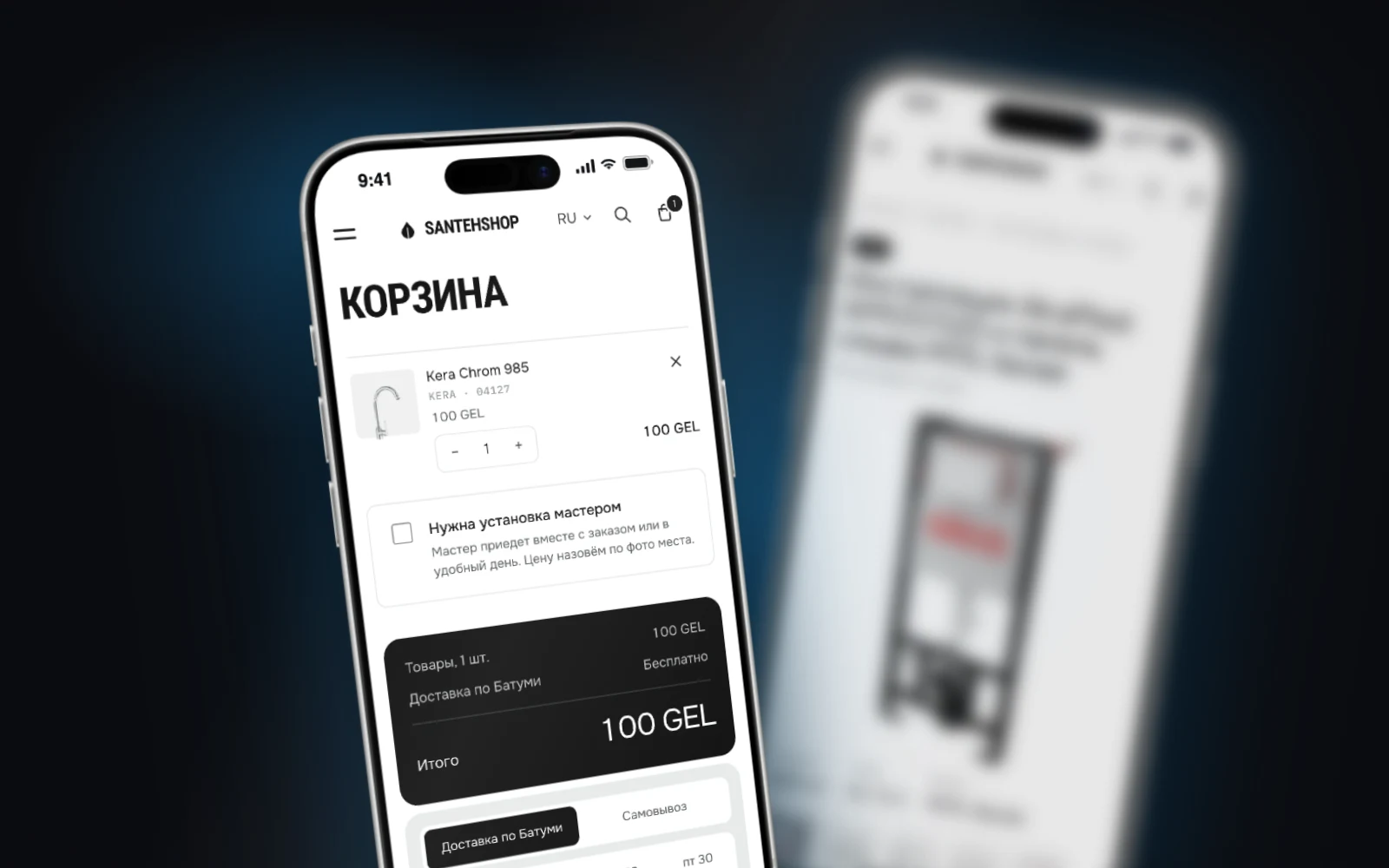
The customer fills a cart, picks delivery and pays. The site checks stock, creates the order and sends the customer to the bank’s page. Once paid, the order becomes “Paid” and the warehouse or courier gets the job. More in our guide to ecommerce websites in Georgia.
Booking with a deposit
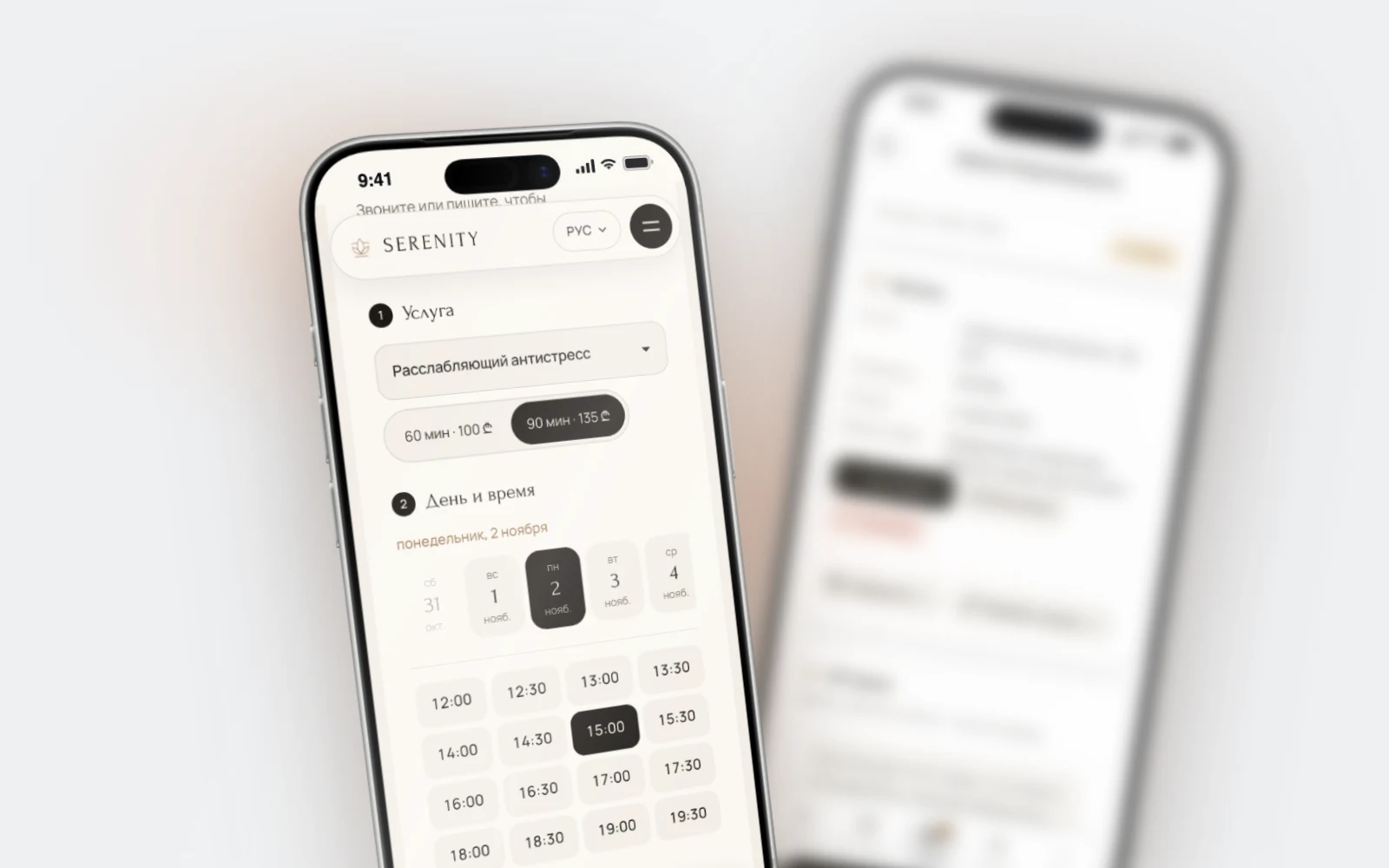
A salon, massage studio or clinic takes a deposit, usually for expensive treatments or new clients. The client picks a service and time, pays, and only then is the slot held for them. If payment doesn’t go through within a few minutes, the slot frees up again. We cover booking itself in A booking website for a salon.
Rental with a security deposit
Apartments, cars or equipment often need a deposit. Pre-authorization helps here: the bank holds an amount on the customer’s card and charges or releases it later. Bank of Georgia’s API supports this; check hold periods and terms in your contract. Without it, the deposit is taken as a normal payment and refunded after check-out.
Subscription
A studio pass, monthly service, access to materials. The customer’s card is saved on the bank’s side and later charges run automatically. The site needs clear terms: amount, charge date and a one-step way to cancel.
How checkout works and why it is safe
The payment steps
- The customer places an order and clicks “Pay”.
- The site creates a payment with the bank and sends the customer to the bank’s secure page.
- The customer enters card details or pays with Apple Pay, Google Pay or the bank’s app.
- The bank sends the customer back to the site and separately reports the result to the site.
- The order in the admin becomes “Paid”, you get a notification and the customer gets an email.
Card details stay with the bank
Card details are entered on the bank’s page. The site never sees or stores them, so if anything happens to the site, there are no card details on it.
Mark orders paid only on the bank’s notice
The most common mistake in a rushed build is marking an order paid because the customer landed on the “Thank you” page. That address can be opened by hand to get an order without paying. The right way is to mark payment only on the notification the bank sends to the site directly, and to double-check the payment status through the bank’s API.
A few more rules we build in:
- the site runs only over a secure connection (HTTPS);
- the order total is calculated on the server, never taken from the customer’s browser;
- bank access keys live on the server and never reach the page code;
- a repeated notification from the bank doesn’t create a second order.
Refunds and partial refunds
Refunds happen in every business: an item didn’t fit, a client cancelled, an order shipped incomplete.
- A full refund is usually made from the bank’s merchant dashboard, or from the website admin if refunds are connected through the API.
- A partial refund is needed when one item is returned or part of a deposit is kept under your cancellation rules. Whether it is available and how it works is set out in your contract with the bank.
- Currency refunds: Flitt says refunds for foreign-currency payments use the exchange rate at the time of purchase, and the merchant covers the difference when the price was in lari.
State your refund rules and a rough timeline on the site, so customers don’t have to ask.
What you need to connect payments
Before applying, make sure you have:
- a company or individual entrepreneur registered in Georgia and an account with the chosen bank;
- a website on HTTPS with clear prices and product or service descriptions;
- contacts: phone, email and seller details;
- delivery or service terms;
- refund and cancellation rules;
- a privacy policy and terms of use.
Banks usually review the site before connecting you, so prepare these pages in advance. On a multilingual site, the terms pages are needed in every language.
The order of steps
- Application and contract with the bank.
- The bank issues test keys.
- We connect payments and test every scenario: success, decline, cancellation, refund.
- The bank reviews the site and switches on live payments.
- We make the first real payment ourselves for a small amount and refund it.
This usually takes from a few days to a couple of weeks. The bank paperwork takes longer than the code.
How payments show up in the admin
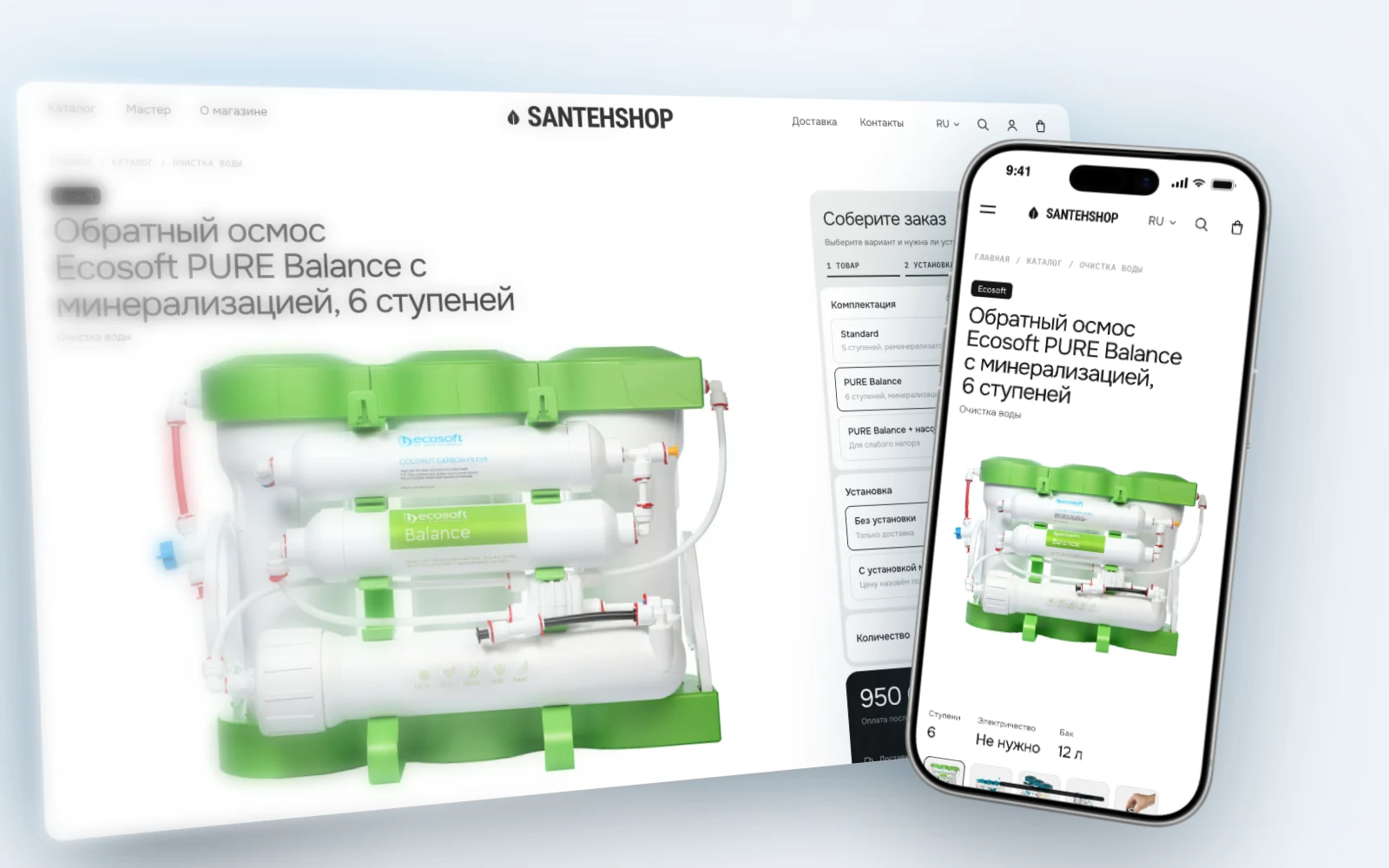
Payments are useful only if you see them where you handle orders. Our own admin already has orders, customers and analytics, as in the Santehshop store. When payments are connected, the payment status is added to the order card.
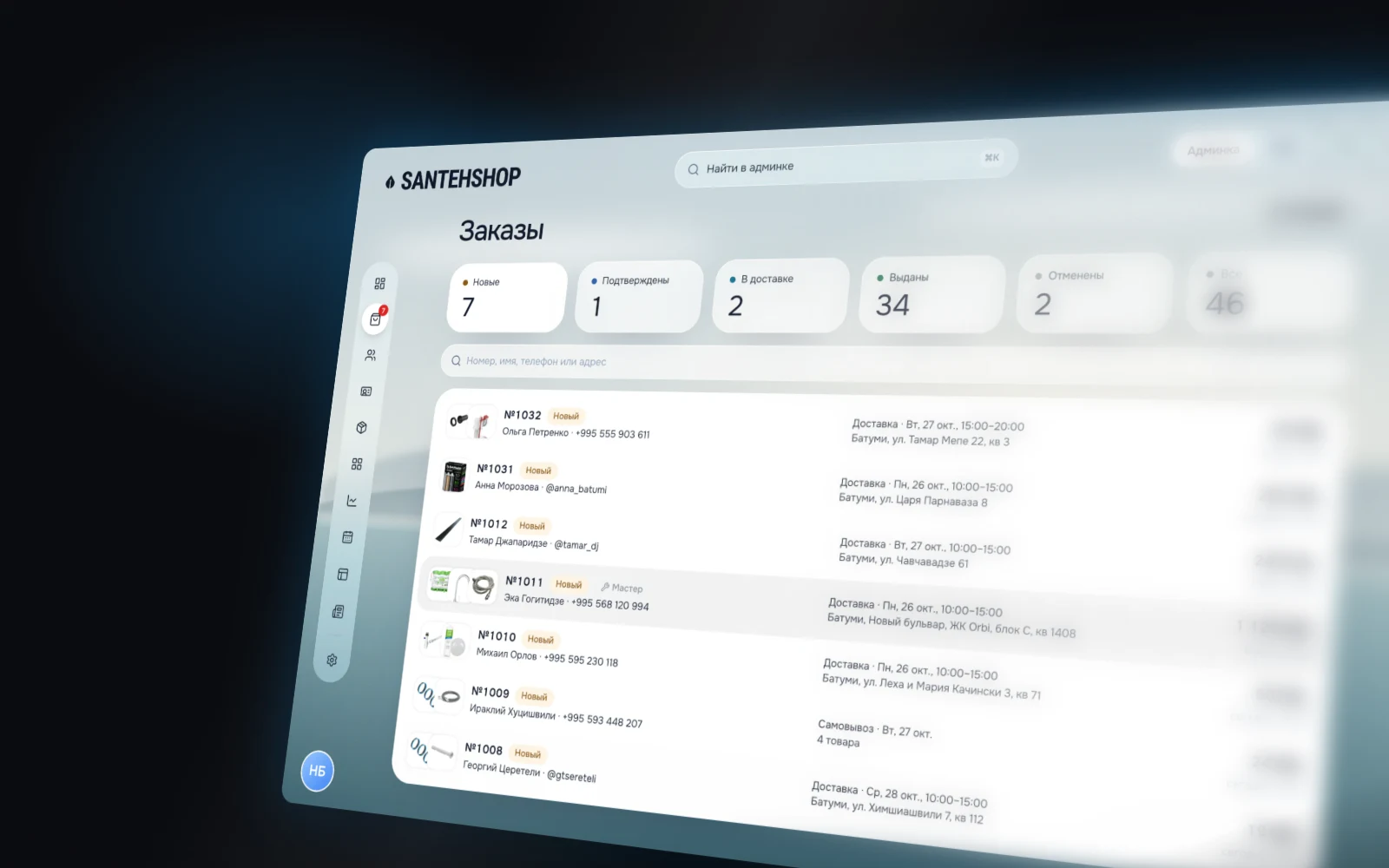
For each order you should see:
- payment status: pending, paid, declined, fully or partly refunded;
- amount, payment method and date;
- the bank’s payment ID, to find it fast in the bank’s dashboard;
- a refund button, if refunds are connected through the API.

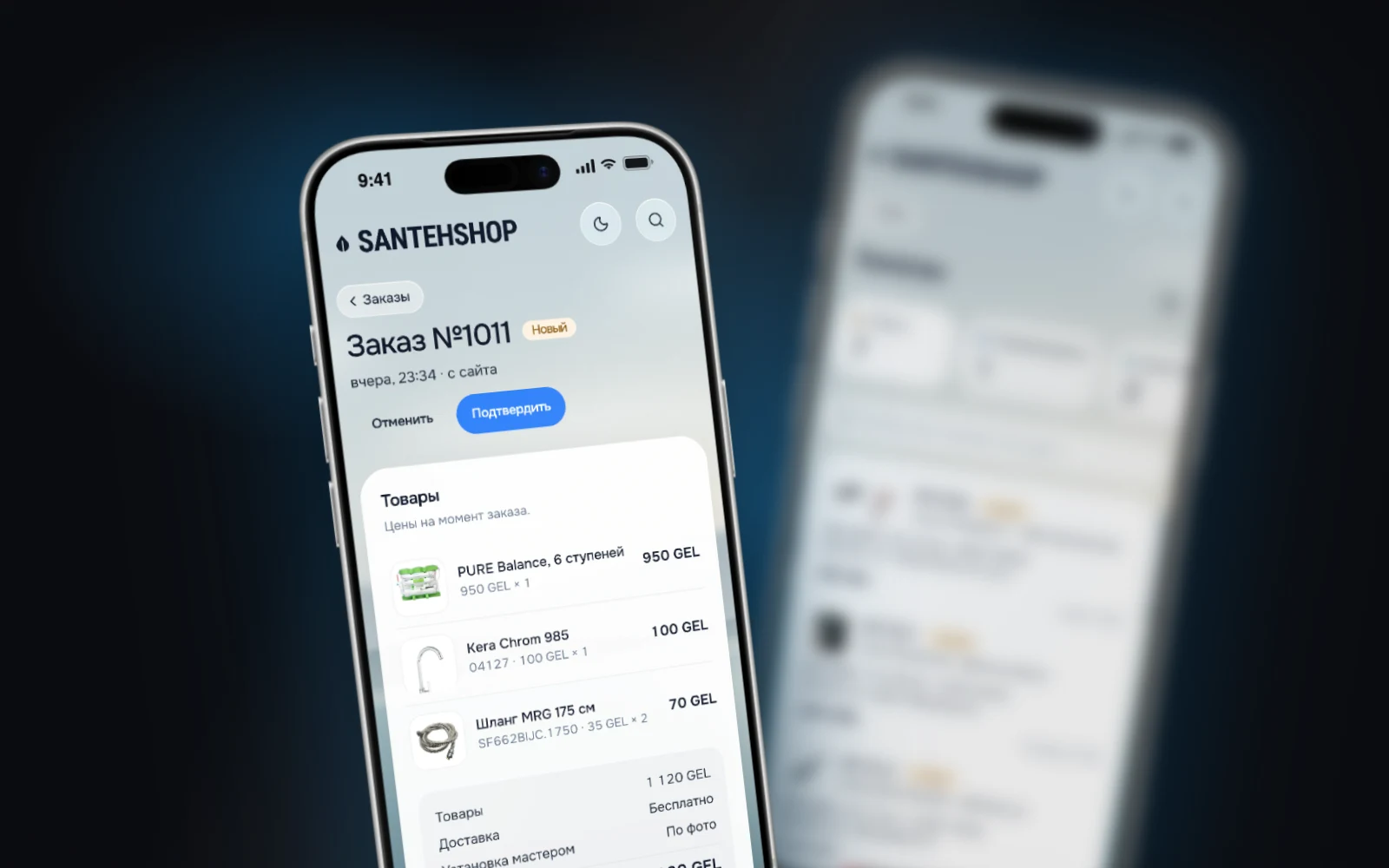
A notification about each new paid order arrives in the admin and in Telegram, and the admin opens on a phone like an app. The store owner sees the payment right away, even away from a computer.
FAQ
Can I accept payments without a website?
Yes. Both Bank of Georgia and Flitt let you create payment links and send them to customers by messenger. For a small number of orders that is enough, and a site with a cart can come later.
What fees do the banks charge?
Payment aggregator comparisons put it around 2–2.5% for Georgian cards, usually more for foreign cards. The bank quotes the exact rate when you apply, depending on your volume.
Can a Georgian company use Stripe?
Not directly: Stripe doesn’t support Georgia as a business country. You would need a company in a supported country. For a business with customers in Georgia, BOG or Flitt is usually simpler.
How long does it take to connect?
Usually from a few days to a couple of weeks: the bank contract, a site review, test payments. Coding checkout on a finished site is quicker than the paperwork.
Can I accept dollars and euros?
Flitt accepts lari, dollars and euros. With Bank of Georgia, check currency terms when you apply: they depend on the contract.
Do I need fiscal receipts, and what about taxes?
It depends on how your business is registered and what you sell. Check with your accountant before you start taking payments; we don’t advise on this.
Is it safe to take payments on my own site?
Yes, as long as card details are entered on the bank’s page and the site gets payment status only from the bank’s notification. That is how we connect payments.
Let’s connect online payments to your website
We do website development in Batumi and across Georgia: service websites, online stores, booking and admins. Take a look at our services and tell us which bank you use, what you sell and whether you need deposits, installments or subscriptions. We will suggest how to connect payments and give you a timeline. We reply within a working day.